From Zulu to India-Kilo

Military Time Zones, Australian Service and the Radio Connection
By VK3XEM
With daylight saving returning to Victoria, it is a good time to look at something that was once very familiar to Australian servicemen, radio operators and communicators — military time-zone designations.
Today, most amateur radio operators simply use UTC, commonly known as Zulu time (Z). But older Australian military personnel were familiar with a system in which individual time zones were identified by letters from the phonetic alphabet.
The Military Time-Zone Alphabet
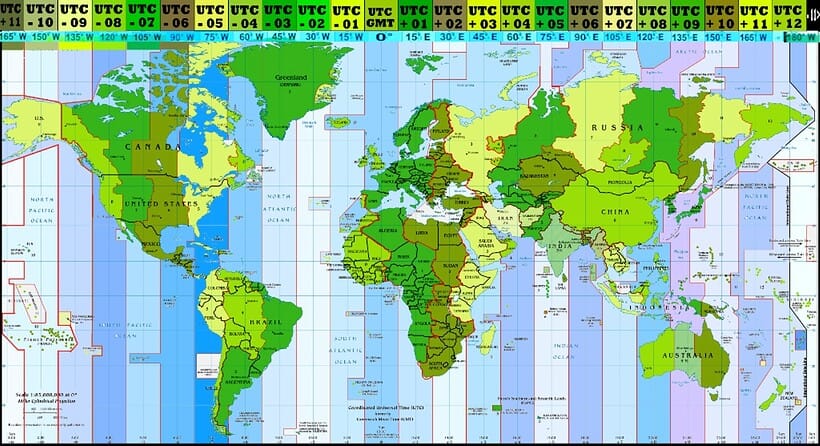
The basic system assigns a letter to each whole-hour difference from UTC:
| Code | Phonetic name | UTC |
|---|---|---|
| Z | Zulu | UTC ±0 |
| G | Golf | UTC +7 |
| H | Hotel | UTC +8 |
| I | India | UTC +9 |
| K | Kilo | UTC +10 |
| L | Lima | UTC +11 |
| M | Mike | UTC +12 |
| N | November | UTC −1 |
| O | Oscar | UTC −2 |
| P | Papa | UTC −3 |
| Q | Quebec | UTC −4 |
| R | Romeo | UTC −5 |
| S | Sierra | UTC −6 |
| T | Tango | UTC −7 |
| U | Uniform | UTC −8 |
| V | Victor | UTC −9 |
| W | Whiskey | UTC −10 |
| X | X-ray | UTC −11 |
| Y | Yankee | UTC −12 |
Juliett (J) is traditionally associated with local time rather than a fixed UTC offset.
The Australian "India-Kilo"
Australia has a particularly interesting connection with this system because not all Australian time zones fall on whole-hour UTC boundaries.
The Northern Territory uses UTC+9½.
Australian military communications used the designation:
India-Kilo (IK) = UTC+9½
The name comes from the two adjacent whole-hour zones:
India (I) = UTC+9
Kilo (K) = UTC+10
Thus, India-Kilo represents the half-hour between them.
Australian Defence records from the Vietnam era demonstrate that India-Kilo was genuinely used in Australian military communications. A time such as:
0800 IK
meant 0800 local time in the UTC+9½ zone — essentially Darwin time.
Vietnam — Golf Time
Australian servicemen serving in Vietnam would have encountered another familiar designation.
South Vietnam was on UTC+7, corresponding to:
Golf (G) = UTC+7
Therefore:
0800 Golf = 0100 Zulu
At exactly the same moment:
0800 Golf = 1030 India-Kilo
This illustrates why the military system was useful. A time could be communicated unambiguously without everyone having to know the local name of the time zone.
And what about Melbourne?
This is where the system becomes particularly relevant to us today.
Melbourne's standard time is:
AEST = UTC+10 = Kilo (K)
So during standard time:
1200 K = 0200 Z
But Victoria observes daylight saving.
During daylight saving Melbourne moves to:
AEDT = UTC+11 = Lima (L)
So the military-style equivalents are:
Melbourne standard time → Kilo (K)
Melbourne daylight time → Lima (L)
The local clock moves forward one hour, but UTC itself doesn't change.
Victoria's Daylight Saving Change
When Victoria changes to daylight saving, the relationship becomes:
AEST — UTC+10 — Kilo
⬇️ +1 hour
AEDT — UTC+11 — Lima
This is why a Melbourne amateur radio operator who normally thinks in AEST may suddenly find that the difference between local time and UTC has changed by an hour.
For radio communications, however, nothing changes if everyone continues to use UTC/Zulu.
That is one of the reasons UTC remains so useful to amateur radio operators: UTC doesn't observe daylight saving.
A Little Piece of Australian Military History
For an Australian soldier of the 1960s and 1970s, expressions such as:
"0700 IK"
"1500 Golf"
"1800 Kilo"
would have been perfectly understandable.
Today we are more likely to say:
0700 UTC+9:30
1500 UTC+7
1800 UTC+10
or simply use UTC.
But the older terminology provides an interesting link between Australian military communications, aviation, maritime operations and today's amateur radio practices.
From India-Kilo to Zulu
For me, there is also a personal connection to this terminology.
I was born in Darwin in 1966, when Darwin was in the UTC+9½ time zone — the military India-Kilo zone.
My father, Wayne Templar, served in the Australian Army during the Vietnam era, when these military time-zone designations were still very much part of Australian service communications.
Decades later, as an amateur radio operator using the callsign VK3XEM, I still routinely use the descendant of that same system:
UTC — Zulu.
The technology has changed enormously since the 1960s, but the fundamental requirement hasn't changed at all:
When communicating over distance, make sure everyone knows what time you mean.
VK3XEM Time-Zone Quick Reference
| Australian time | UTC | Military designation |
|---|---|---|
| Darwin | UTC+9½ | India-Kilo (IK) |
| Melbourne — standard | UTC+10 | Kilo (K) |
| Melbourne — daylight saving | UTC+11 | Lima (L) |
| UTC / Universal Time | UTC±0 | Zulu (Z) |
| Vietnam | UTC+7 | Golf (G) |
73 from VK3XEM — and remember: when in doubt, use Zulu! 📻🇦🇺
